UK car industry faces trade-off between Chinese and EU markets
Britain’s car industry is being forced to weigh Chinese investment against continued access to the EU market. The bloc accounted for 58% of UK car exports in the first half of the year, compared with about 4% for China.
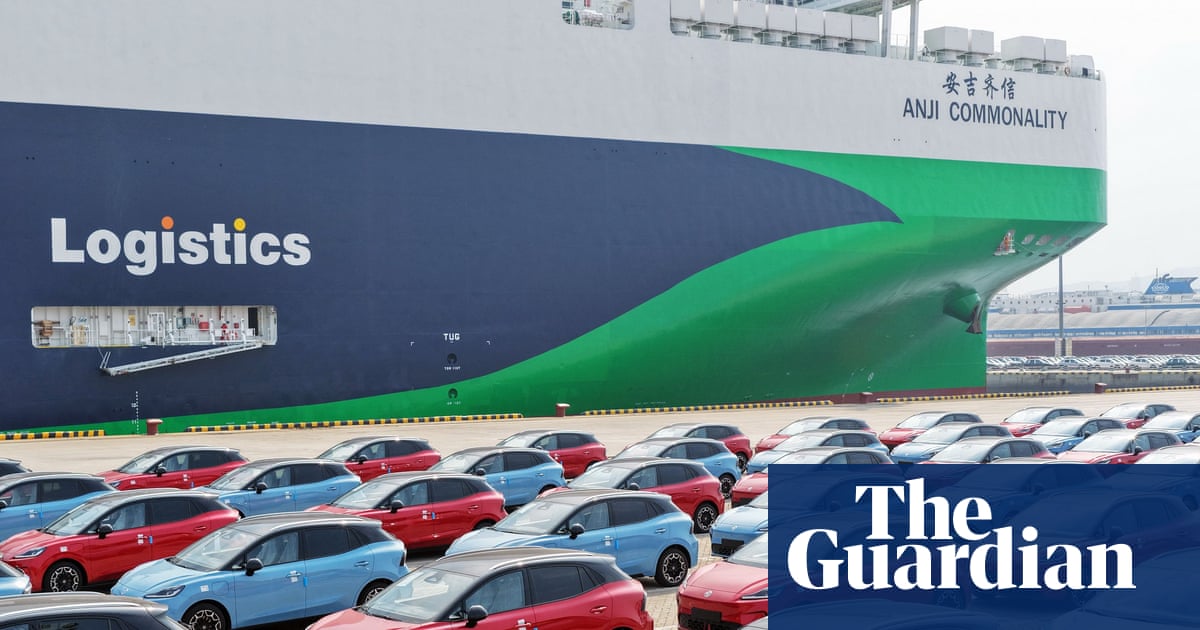
Image: theguardian.com · Author: https://www.theguardian.com/profile/alex-daniel · source articleEditorial excerpt for news reporting
Britain’s car industry is weighing Chinese investment against continued access to the European market. Manufacturers fear that new trade barriers could restrict UK exports to the EU.
The UK has so far chosen not to impose tariffs on Chinese vehicles. The US has almost entirely shut them out, while the EU applies duties of up to 45%.
European officials reportedly warned Greater Manchester mayor Andy Burnham that Brussels could introduce “made in Europe” rules unless Britain taxes cheaper Chinese vehicles. The rules restrict subsidies, tax breaks and public procurement access for cars built outside the EU.
Europe remains the key market
The EU accounted for 58% of UK car exports in the first half of the year, compared with about 4% for China. The Society of Motor Manufacturers and Traders said effectively excluding British-built vehicles from the bloc could threaten UK production.
Industry figures showed that BYD, Omoda and Jaecoo more than tripled their combined share of the UK new-car market in the first eight months of 2026, reaching 12% of sales. New-car registrations rose 12% year on year in September, with electric vehicles and Chinese brands driving demand.
Investment versus tariffs
Business Secretary Jonathan Reynolds has argued that UK tariffs would probably prompt Chinese retaliation and reduce sales by British manufacturers in China. Tariffs could also raise prices for drivers and put further investment at risk, including Chery’s talks to build cars at Nissan’s Sunderland plant.
Emily Sawicz of RSM UK described the situation as a difficult trade-off and called for a clear long-term government direction. She said Chinese investment could support carmakers, while access to Europe was crucial for smaller manufacturers.
Chery rejected concerns that Chinese companies could use Britain to bypass European restrictions. Victor Zhang, the company’s deputy UK chief, said most of its sales were hybrids and that cars sold in Britain remained in the UK; he added that tariffs would not change Chery’s ongoing investment.
Europe considers further restrictions
The EU increased tariffs on Chinese electric vehicles in 2024, after which their sales growth declined. European policymakers are now facing calls for new barriers on hybrid vehicles, including quotas or price floors.
Tim Tozer, a former Vauxhall chair, said tariffs were needed to protect British manufacturers as their domestic market share eroded. Ian Plummer, Autotrader’s commercial director, said Chinese competition had made cars more affordable and encouraged more people to buy new vehicles.
What we know
- Britain’s car industry is balancing Chinese investment against access to the EU market.
- The EU took 58% of UK car exports in the first half of the year.
- BYD, Omoda and Jaecoo reached 12% of UK new-car sales in the first eight months of 2026.
- The EU applies tariffs of up to 45% on Chinese vehicles.
- Chery said potential tariffs would not change its ongoing UK investment.
What is being verified
- The newsroom is checking the report that britain’s car industry is balancing Chinese investment against access to the EU market.
- Reporting from The Guardian World is being compared; a second independent confirmation is not yet available.
View sources1
COMMUNITY
Discussion
Sign in to join the discussion.
No comments yet. Start the discussion.