Trump says US stance on Falklands is under review, bolstering Milei’s claim against the UK
US President Donald Trump said he is reviewing the long-standing US neutral stance on sovereignty over the Falkland Islands, prompting Argentinian president Javier Milei to announce renewed claims to the islands. Milei used a televised address to set out intentions to reopen Argentina’s claim to the Malvinas, territories Britain has administered since the 1982 conflict. Trump’s comments are linked in reporting to his grievance with the UK for not backing potential US action on Iran and fit a broader pattern of punitive moves against allies. The move could strain the special relationship with London and introduce wider diplomatic and security consequences, though precise outcomes remain unclear.
What happened
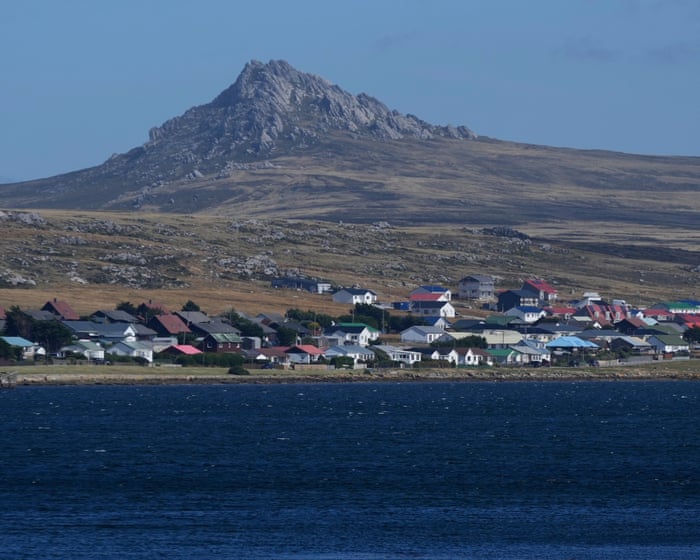
US President Donald Trump told GB News he is ‘‘reviewing’’ America’s long-standing neutral stance on sovereignty over the Falkland Islands, a statement that prompted Argentine president Javier Milei to renew his country’s claim. Milei used a televised address, flanked by cabinet members, to signal his intention to press Argentina’s claim to the islands known in Argentina as the Malvinas.
The islands have been a point of dispute since a brief war in 1982, when Argentina’s ruling military junta invaded the territory and Britain, under then-prime minister Margaret Thatcher, dispatched a naval taskforce that retook the islands and forced Argentina’s surrender. The territory has since remained under British control and is inhabited by fewer than 2,000 people who consistently assert their desire to remain British.
Trump’s GB News interview included a pointed complaint about Britain’s response to his request for support: ‘‘Your country was not there to help me. We didn't need help, but I did ask Nato, and I asked your former leader, ‘Why don't you send a couple of ships?’ He said, ‘We don't have any.’ It was pretty sad, the whole thing.’’ The report connects that grievance to his willingness to reconsider US policy on the islands.
Why this is happening
The reporting frames Trump’s statement within a pattern of punitive responses toward allies who did not back his approach to possible action against Iran. It notes that the past three and a half years have hardened a mindset of ‘‘retribution’’ that the article says Milei has sought to exploit.
The UK’s perceived refusal to support potential US military action on Iran — linked to former prime minister Keir Starmer in the piece — is singled out as a proximate aggravating factor. The article also lists other instances in which Trump has shown hostility to partners: annual military exercises with South Korea were scaled down and cut short by six days on his orders, and the White House announced the withdrawal of 5,000 US troops from Germany after Chancellor Friedrich Merz resisted pressure to join involvement with Iran.
Other examples in the report include threats from Trump to ‘‘bomb’’ or ‘‘blow up’’ Oman if it obstructs efforts to reopen the Strait of Hormuz, and pressure on Spain and Italy over defense spending. These examples are used to explain a broader context in which Trump might leverage the Falklands issue as part of his stance toward allies.
How this will affect things
The article argues that a US review of policy toward the Falklands could damage the ‘‘special relationship’’ between the United States and Britain, which has been strengthened through two world wars, the Cold War and later conflicts. A change in US posture could undermine diplomatic stability and create new tensions between Washington and London.
It also suggests the possibility that Trump could use the threat as a bargaining tool to extract more defense spending or other concessions from the UK treasury. The report refers to newly installed British chancellor of the exchequer John Healey and his recent comments that increased defense spending targets might not be met as part of that financial context.
The article is careful to note that no formal US policy change or legal action regarding sovereignty has been announced; it describes statements and intentions rather than confirmed diplomatic steps. Therefore, concrete impacts remain speculative until further official measures are taken.
What happens next
The piece emphasizes that it is not yet known whether or when Washington would move from rhetoric to formal policy change. Further diplomatic steps, official statements and documentation would be required to establish any alteration in US recognition of sovereignty over the islands.
It also flags Milei’s domestic political calculus: while he invoked ‘‘winds of change’’ and said the sun was setting on Britain, he did not acknowledge his own falling popularity in that speech. The report draws a historical parallel to Argentina’s 1982 junta seizure of the islands, which occurred amid domestic political turmoil and human rights abuses, noting that such dynamics can be a factor in renewed claims.
Finally, the article places the episode in a broader pattern of tension between the Trump administration and longstanding US allies. It underlines that additional facts — such as diplomatic notes, explicit policy shifts from the White House, or responses from London and other partners — are needed to determine the practical consequences; without them, predictions on outcomes remain unconfirmed.
What we know
- Donald Trump told GB News he is ‘‘reviewing’’ the US stance on sovereignty over the Falkland Islands.
- Argentine president Javier Milei used a televised address to announce intentions to reopen Argentina’s claim to the Malvinas.
- The 1982 war began after an invasion by Argentina’s military junta; Britain under Margaret Thatcher sent a naval taskforce and reclaimed the islands.
- The islands are inhabited by fewer than 2,000 people who have consistently said they wish to remain British.
- The article notes the US last year extended Javier Milei’s government a $20bn loan guarantee contingent on his party defeating the leftist opposition in congressional elections.
What is being verified
- The newsroom is checking the report that donald Trump told GB News he is ‘‘reviewing’’ the US stance on sovereignty over the Falkland Islands.
- Reporting from The Guardian World is being compared; a second independent confirmation is not yet available.
View sources1
COMMUNITY
Discussion
Sign in to join the discussion.
No comments yet. Start the discussion.