John Maynard Keynes: the economist governments turn to in a crisis
James Graham’s new play The Standard of Living examines John Maynard Keynes, whose economic ideas regained influence during major crises. The production is at Theatre Royal Haymarket in London until 12 December.
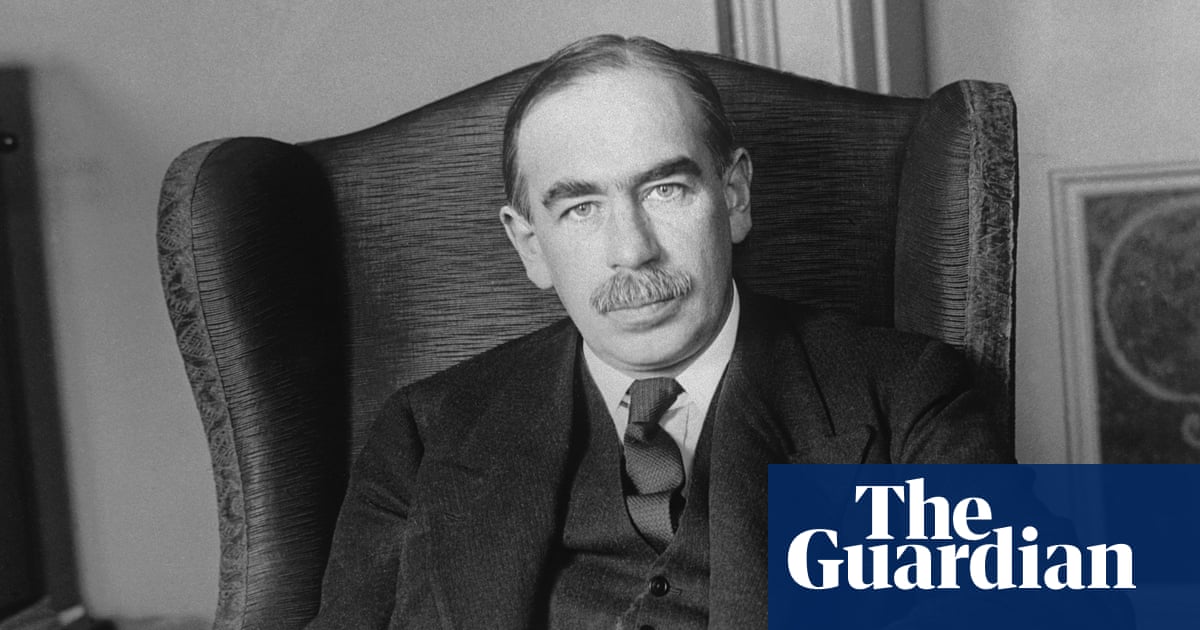
Image: theguardian.com · Author: https://www.theguardian.com/profile/larryelliott · source articleEditorial excerpt for news reporting
James Graham’s new play The Standard of Living focuses on John Maynard Keynes, one of the most influential economists of the 20th century. The production is running at London’s Theatre Royal Haymarket until 12 December.
Keynes combined public service, economic research and a strong interest in art. In 1918, while working at the Treasury, he travelled to France for an auction of Edgar Degas’s studio and persuaded the chancellor of the exchequer to approve £20,000 for works intended for the National Gallery.
Economics as a route to a better life
The play presents Keynes as more than a statistician. He believed economic growth should create more leisure rather than simply encourage the accumulation of wealth. In Economic Possibilities for Our Grandchildren, he imagined a future in which shorter working hours would follow the eventual solution of the economic problem.
Born into a prosperous academic family, Keynes attended Eton and Cambridge. After university, he became part of the Bloomsbury Group, whose members included Virginia Woolf, Lytton Strachey and Duncan Grant. In 1925, he married the Russian ballet dancer Lydia Lopokova.
Keynes and Friedrich Hayek
A central theme of the play is the clash between Keynes and the Austrian economist Friedrich Hayek. Hayek believed free markets could deliver the best outcomes without state direction, while Keynes argued that high unemployment could persist indefinitely unless governments intervened to stimulate demand.
Keynes developed that argument in The General Theory of Employment, Interest and Money. His approach strongly influenced policymaking after the second world war, when governments took responsibility for managing demand and supporting full employment.
From stagflation to financial crisis
Keynesian economics fell out of favour by the mid-1970s, when western economies faced rising inflation alongside weak growth. The political ascendancy shifted to the new right associated with Margaret Thatcher and Ronald Reagan, while economic policy moved closer to Hayek’s ideas.
After the global financial crisis of 2008, governments again turned to measures designed to stimulate economies. The article also identifies the global pandemic of 2020 as another period in which Keynes’s ideas regained practical relevance.
What we know
- James Graham’s play about Keynes is running in London until 12 December.
- In 1918, Keynes secured £20,000 for artworks intended for the National Gallery.
- Keynes argued that governments should intervene when unemployment does not resolve on its own.
- His ideas regained influence after the 2008 financial crisis and the 2020 pandemic.
Trust: Single source
- The story relies on one publisher. A second independent confirmation has not been established from the cited sources.
- Cited links: 1. Publisher groups: 1. Sources: The Guardian Business.
- This describes the available source evidence, not a probability of truth or a claim of manual editorial review.
View sources1
COMMUNITY
Discussion
Sign in to join the discussion.
No comments yet. Start the discussion.