Former Brazilian air force chief says he refused to join draft decree to annul 2022 vote
Carlos de Almeida Baptista Júnior, the former head of Brazil’s air force, says a draft decree to annul Luiz Inácio Lula da Silva’s October 2022 victory was presented to the armed forces and that he refused to accept it, leaving the meeting with the defence minister. He writes that the air force would not participate in any such measure and recounts multiple occasions when Jair Bolsonaro tried to stay in power after losing the election. Prosecutors and judges concluded the coup attempt failed largely because the commanders of the air force and the army would not join; several other senior officers have since been convicted. Baptista Júnior’s memoir, translated as I Said No! – An Anti‑Coup Bulwark, is scheduled for publication on 15 September, shortly before Brazil’s next presidential run-off between Lula and Flávio Bolsonaro.
The draft decree shown from a plastic folder In his forthcoming memoir, translated as I Said No! – An Anti‑Coup Bulwark, Carlos de Almeida Baptista Júnior recounts a meeting held about six weeks after the October 2022 election. At that meeting, Defence Minister Gen Paulo Sérgio Nogueira de Oliveira produced a document from a plastic folder and distributed copies to the navy, army and air force commanders. According to Baptista Júnior, the paper was a draft decree intended to annul Luiz Inácio Lula da Silva’s victory and keep Jair Bolsonaro in power.
The air force chief’s refusal and what happened in the room Baptista Júnior says he refused even to take the document and told the defence minister: “The air force will not take part in this.” He then stood up and left the room. Investigators and the subsequent trial concluded that the plot failed largely because the commanders of two of the three services would not participate.
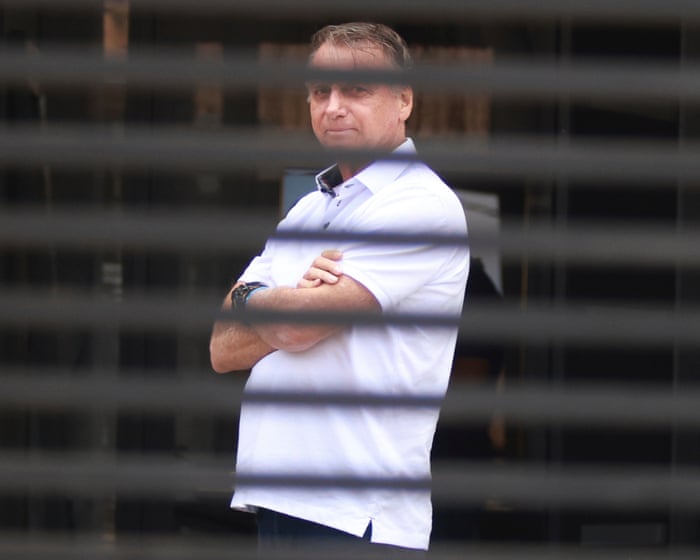
Convictions and who was punished The investigation and trial led to convictions for several senior figures. The navy commander, Adm Almir Garnier Santos, and the defence minister Nogueira were convicted and are serving sentences in military facilities. Jair Bolsonaro has been placed under house arrest. Walter Souza Braga Netto, once seen by Baptista Júnior as a friend and later accused of orchestrating online attacks against him, was also convicted.
The army commander’s stance Army commander Gen Marco Antônio Freire Gomes likewise refused to join the plan, and Baptista Júnior recounts an episode in which the army chief told the president, after a proposal for an institutional rupture, “If you do that, I’ll have to arrest you.” Freire Gomes has maintained a low profile since the events.
What the book does and does not detail Baptista Júnior provides a granular account of the many meetings in which Bolsonaro sought ways to remain in power, but he does not elaborate on one of the most shocking revelations from the investigation: a plan by army special forces to kidnap or assassinate Lula. The former air force chief says he was not summoned to those meetings and learned of that plan only through the press.
Why he wrote the book The 65‑year‑old former fighter pilot says he was motivated to publish because, despite the weight of evidence presented at the trial, polls still showed about a third of Brazilians did not believe there had been an attempted coup. He argues that keeping in power someone who lost an election is a coup d’état and wanted to leave a first‑hand record.
His political stance and anecdotes Baptista Júnior notes that he voted for Bolsonaro in both 2018 and 2022, and includes lighter personal recollections — such as a barbecue moment when the first lady scolded the president for drinking beer — while remaining sharply critical of Bolsonaro’s political and institutional shortcomings. He describes Bolsonaro as having “significant limitations in political, institutional and administrative experience” and an “almost total imperviousness to outside opinions or information that did not conform to the ‘truths’ he had already established as his own.”
Bolsonaro’s actions regarding the vote count During and after the election, Baptista Júnior writes, Bolsonaro became consumed with staying in office: he repeatedly cast doubt on the vote and ordered the armed forces to examine the electronic voting system, but then rejected their reports when they found no irregularities.
Personal cost for saying no Refusing to join the plot cost Baptista Júnior “many friendships,” he says. Some military colleagues still call him a “traitor” or a “watermelon” — a slur for soldiers perceived as green on the outside but red within. He reports that attacks on him and his family were organised online, including at the behest of figures he had considered friends.
Expert criticism and unresolved accountability Juliano da Silva Cortinhas, who worked on the civilian side of the defence ministry from 2013 to 2016, welcomed that senior officers said no but argued they should have reported the attempted coup to police at the time. Cortinhas also criticised the armed forces for allowing active‑duty personnel to take civilian posts during Bolsonaro’s government, noting it had the largest number of military in civilian roles since the 1964–85 dictatorship. He said some people involved escaped justice and many were not identified.
Risk of future attempts and international factors Cortinhas warned the risk of another coup is higher today and pointed to a new factor: US president Donald Trump’s attempts to influence elections across Latin America in support of right‑wing candidates such as Flávio Bolsonaro. He recalled that in 2022, when Joe Biden was in the White House, Bolsonaro’s vice‑president acknowledged a coup attempt would leave Brazil in a “difficult position before the international community.” Baptista Júnior confirms that, while it is hard to know how many, there remain active‑duty officers who believe a coup d’état could be justified in certain circumstances.
Publication timing ahead of the next election Baptista Júnior’s book is scheduled for publication on 15 September, about two weeks before the first round of the presidential election in which Lula is expected to face Flávio Bolsonaro, one of Jair Bolsonaro’s sons. The author says he will vote for neither candidate and rejects accusations from some supporters that he is trying to sway the vote; he attributes the book’s timing to the writing and editing process.
What we know
- Former air force chief Carlos de Almeida Baptista Júnior says he refused to accept a draft decree in late 2022 that would have annulled Lula’s electoral victory.
- Defence Minister Gen Paulo Sérgio Nogueira de Oliveira produced the draft decree from a plastic folder and handed copies to navy, army and air force commanders at a meeting.
- Prosecutors and a trial concluded the coup attempt stalled mainly because the air force and army commanders refused to participate; several senior officers have since been convicted.
- Baptista Júnior’s memoir, translated as I Said No! – An Anti‑Coup Bulwark, is due for publication on 15 September, about two weeks before Brazil’s next presidential first round.
- Analysts say many involved escaped identification or punishment and warn that some active‑duty officers still regard a coup as justifiable in certain circumstances.
What is being verified
- The newsroom is checking the report that former air force chief Carlos de Almeida Baptista Júnior says he refused to accept a draft decree in late 2022 that would have annulled Lula’s electoral victory.
- Reporting from The Guardian World is being compared; a second independent confirmation is not yet available.
View sources1
COMMUNITY
Discussion
Sign in to join the discussion.
No comments yet. Start the discussion.