US military strikes three Iranian oil tankers after missiles targeted Navy warships
The U.S. military said it struck three Iranian oil tankers on Saturday after Navy warships were reportedly targeted by missiles. The U.S. statement said two tankers were permanently disabled and a third unladen vessel was destroyed, and released video footage of the strikes. U.S. Central Command said the tankers belonged to a network funding Iran's Revolutionary Guard and its proxies. The action follows a renewal of hostilities that began on Feb. 28 and stalled negotiations after a mid-June memorandum of understanding.
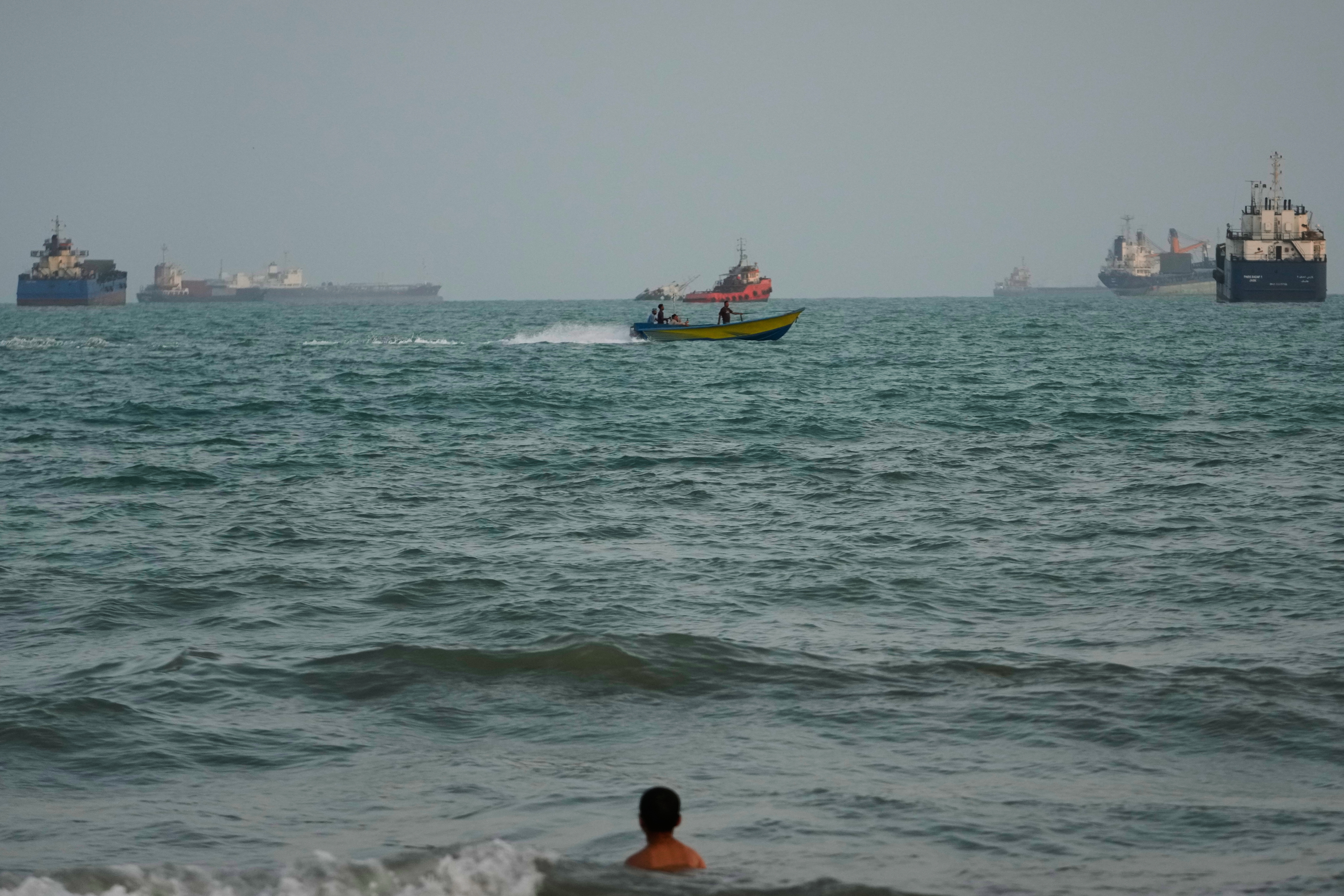
Details of the strikes and official U.S. account
In a statement on Saturday, U.S. military officials said an aircraft carrier and a destroyer evaded "multiple unprovoked Iranian attacks" while patrolling the region. The statement added that no U.S. personnel were injured and that video footage of the strikes was shared by U.S. forces.
The U.S. account specifies that two oil tankers were "permanently disabled" and a third, unladen vessel was destroyed. U.S. military officials described the ships as part of a "shadow network" that helps finance Iran's Islamic Revolutionary Guard Corps (IRGC) and its armed proxies in the region.
Locations and sequence of events
According to the U.S. statement, one tanker was struck off Kharg Island, a terminal through which Iran exports most of its oil. Another was struck near Jask, east of the Strait of Hormuz. The unladen tanker was hit in the Gulf of Oman.
Iranian state television earlier reported that four U.S. missiles struck a tanker about six miles (10 kilometers) from Kharg Island. Kharg has been targeted repeatedly during the war, including U.S. strikes on military sites there in March.
Renewed hostilities and recent trajectory of the war
The strikes came one day after President Donald Trump sought to downplay the conflict, calling it "small potatoes." Nonetheless, the operation marks a renewed tilt toward fighting after roughly six months of intermittent war that began with U.S. and Israeli attacks on Feb. 28.
Both sides have pursued measures aimed at inflicting military and economic pain on the other, and diplomatic efforts collapsed. The strikes followed a resumption of attacks nearly a week earlier, after about a month of relative calm, with the Strait of Hormuz and nearby Iranian communities again being targeted.
Casualties and earlier incidents this week
The report notes that at least five people were killed earlier in the week during a U.S. bombardment of southern Iran; one strike hit a wedding. Those incidents have contributed to the escalation and underline civilian casualties during the current cycle of fighting.
Statements by U.S. commanders and stated motives
Adm. Brad Cooper, head of U.S. Central Command, said: "We will not hesitate to defend American forces, and if necessary, destroy Iran's limited and exposed oil fleet." The remark indicates that U.S. officials view strikes both as immediate defense measures and as pressure on Iran's economic capabilities.
The alleged role of the tankers in funding IRGC and proxies
U.S. officials asserted that the targeted tankers belonged to a network facilitating funding for the IRGC and its regional proxies. The statement calls this group a "shadow network," but it does not list specific owners or routes that would allow independent verification of those claims.
Shipping, control of the Strait of Hormuz and maritime traffic
The statement emphasizes that the Strait of Hormuz is crucial to global oil and natural gas shipments. Before the war, the strait was viewed as an international waterway; amid the conflict, Iran has asserted more control and targeted some vessels, and overall traffic has declined.
U.S. naval escort of commercial vessels
The U.S. military has been guiding commercial ships through the strait as Tehran asserts control and attacks some vessels. The overall level of shipping traffic remains low compared with pre-war levels, according to the U.S. account.
Evidence presented and unanswered specifics
The U.S. released video material that it says documents the strikes. The report does not include a technical assessment of that material or independent verification; the claims rely on official U.S. statements.
Diplomatic background and the stalled negotiations
The report recalls that the issue that helped precipitate the war — Iran's nuclear program — was meant to be addressed in negotiations that broke down soon after the U.S. and Iran signed a memorandum of understanding in mid-June. Instead, Tehran has emphasized its leverage over the strait as a bargaining tool.
Summary and significance
The strikes on the three tankers underline a shift toward striking economic infrastructure the U.S. links to Iran's military financing. The action shows both military and economic dimensions in a conflict that began on Feb. 28 and has seen periodic escalation, diplomatic failure and renewed attacks within the past week.
Outstanding questions
The U.S. statement does not provide detailed public documentation on the ownership of the targeted vessels or complete evidence that would independently corroborate the claim that they were part of a financing network for the IRGC and proxies. Those details remain absent from the released material.
What we know
- U.S. forces say they struck three Iranian oil tankers on Saturday after missiles targeted U.S. Navy ships.
- The U.S. statement says two tankers were permanently disabled and a third unladen vessel was destroyed.
- Strikes occurred off Kharg Island, near Jask east of the Strait of Hormuz, and in the Gulf of Oman; Iranian state TV reported hits about six miles from Kharg.
- U.S. officials described the vessels as part of a "shadow network" financing the IRGC and its regional proxies.
- Adm. Brad Cooper said the U.S. will not hesitate to defend its forces and, if necessary, destroy Iran's limited and exposed oil fleet.
- Earlier in the week, at least five people were killed during a U.S. bombardment of southern Iran, including an attack that struck a wedding.
What is being verified
- The newsroom is checking the report that u.S. forces say they struck three Iranian oil tankers on Saturday after missiles targeted U.S. Navy ships.
- Reporting from NPR World is being compared; a second independent confirmation is not yet available.
View sources1
COMMUNITY
Discussion
Sign in to join the discussion.
No comments yet. Start the discussion.