Sánchez says there is no evidence Morocco planned Ceuta border breach
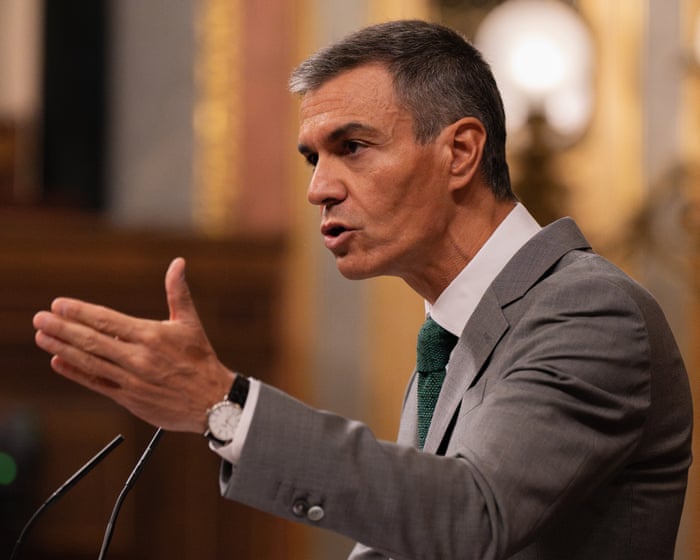
Spanish prime minister Pedro Sánchez told parliament his government has seen ‘‘no evidence whatsoever’’ that Morocco planned or carried out the mass border breach into Ceuta. The statement followed a judge-commissioned police report, cited in the media, alleging Moroccan border forces aided about 70,000 people to cross in late July; Sánchez said no international body or diplomatic service has provided solid evidence to the Spanish government. He denied prior warnings of the scale of the incident but acknowledged that Moroccan forces allowed crossings during a key 10-hour window on 30 July. The episode triggered protests in Madrid, a political backlash in Spain and a humanitarian emergency in Ceuta, where around 141 people are thought to have died and several thousand—including at least 500 minors—remain after most returned to Morocco within 24 hours.
What happened
In late July a large number of people crossed into the Spanish North African enclave of Ceuta. A police report, commissioned by a judge and widely quoted in the media, alleged that Moroccan border forces actively aided about 70,000 people to enter. The Spanish government, represented in parliament by prime minister Pedro Sánchez, says it has not been provided with solid evidence that Morocco planned or carried out the incident.
Spanish authorities coordinated the return of most people to Morocco: reports indicate roughly 90% returned within 24 hours. Nevertheless, several thousand are believed to remain in Ceuta, some living on the streets and others in makeshift shelters, including an estimated 500 minors.
The episode produced human losses and a humanitarian emergency: about 141 people are thought to have died trying to enter Ceuta. The mass movement also provoked political fallout in Spain and renewed debate in the EU over migration policy.
Why this is happening
Pedro Sánchez told parliament that no institution—neither the diplomatic service, nor the European Commission, nor any international body—had provided the Spanish government with ‘‘any solid evidence’’ that Morocco planned or carried out the incident. At the same time, he acknowledged that Moroccan forces allowed crossings to occur during a key 10-hour period on 30 July, a point corroborated by accounts from many who crossed saying they had been encouraged.
The judge-commissioned police report, cited in the press, claims active assistance by Moroccan border guards and places the number of those who entered at about 70,000. Moroccan officials have denied enabling the crossing. Sánchez said he has ‘‘for now’’ ruled out Moroccan government involvement but kept open further inquiry into the available information.
Tensions were also exacerbated by public statements from Moroccan officials. Last month Morocco’s justice minister Abdellatif Ouahbi reiterated Rabat’s sovereignty claims over Ceuta and Melilla. Spain summoned the Moroccan ambassador on 21 August over ‘‘unacceptable statements’’ by two ministers concerning the cities.
How it will affect
The incident has intensified domestic political attacks: the opposition People’s Party leader Alberto Núñez Feijóo demanded Sánchez’s resignation for what he called ‘‘incompetence and complicity’’. Vox leader Santiago Abascal responded to the ambassador being summoned by saying: ‘‘Morocco doesn’t need an ambassador in Spain – you are its ambassador’’. Those reactions have sharpened debate about government responsibility and foreign policy.
Practically, the crisis is likely to prompt investment in facilities in Ceuta to house the remaining migrants rather than moving them en masse to the mainland, which the government fears would provoke political backlash at home and across Europe. Many local residents displayed hostility, and there is evidence some migrants, faced with hunger and pressure, have already started returning to Morocco.
Legally, Sánchez reminded MPs that under Spanish, European and international law migrants must be treated as individuals. He rejected the idea of mass forced returns and told parliament that you cannot ‘‘just grab someone by the arm and drag them across the frontier as though they were a sack of dirt’’. He also warned that economic disparities—he noted Ceuta’s per capita income is eight times that of Morocco—mean people will continue to risk dangerous crossings.
What next
Sánchez appealed for European solidarity in addressing the Ceuta crisis, arguing the principle of solidarity should apply to Ceuta as much as to other border areas. Although he did not name countries, a passage in his speech was apparently aimed at Italy and Denmark, which had publicly criticised Spain’s handling of the incident.
In the short term, the government faces practical decisions about shelter, protection and care for the remaining thousands, including minors. Reports suggest the government is more likely to invest in local facilities in Ceuta than to transfer large numbers to the Spanish mainland.
What remains uncertain is whether further evidence will emerge to confirm or refute the claims in the police report about organised assistance. It is also unclear how the episode will affect Spain–Morocco relations over the coming months, given diplomatic protests, public statements and ongoing investigations.
What we know
- A judge-commissioned police report, widely cited in the media, alleges Moroccan border forces aided about 70,000 people to cross into Ceuta in late July.
- Prime minister Pedro Sánchez told parliament the Spanish government has seen ‘‘no solid evidence’’ that Morocco planned or carried out the incident.
- Spain summoned the Moroccan ambassador on 21 August over ‘‘unacceptable statements’’ by two ministers regarding Ceuta and Melilla.
- About 90% of those who crossed returned to Morocco within 24 hours; several thousand remain in Ceuta, including at least 500 minors.
- Around 141 people are thought to have died attempting to enter Ceuta.
What is being verified
- The newsroom is checking the report that a judge-commissioned police report, widely cited in the media, alleges Moroccan border forces aided about 70,000 people to cross into Ceuta in late July.
- Reporting from The Guardian World is being compared; a second independent confirmation is not yet available.
View sources1
COMMUNITY
Discussion
Sign in to join the discussion.
No comments yet. Start the discussion.