Why Republicans accept Trump’s state control while denouncing communism
Donald Trump denounces communism while expanding the US government’s stakes in private companies. V-Dem data ranked the United States 16th for state control of the economy in 2025, down from second place.
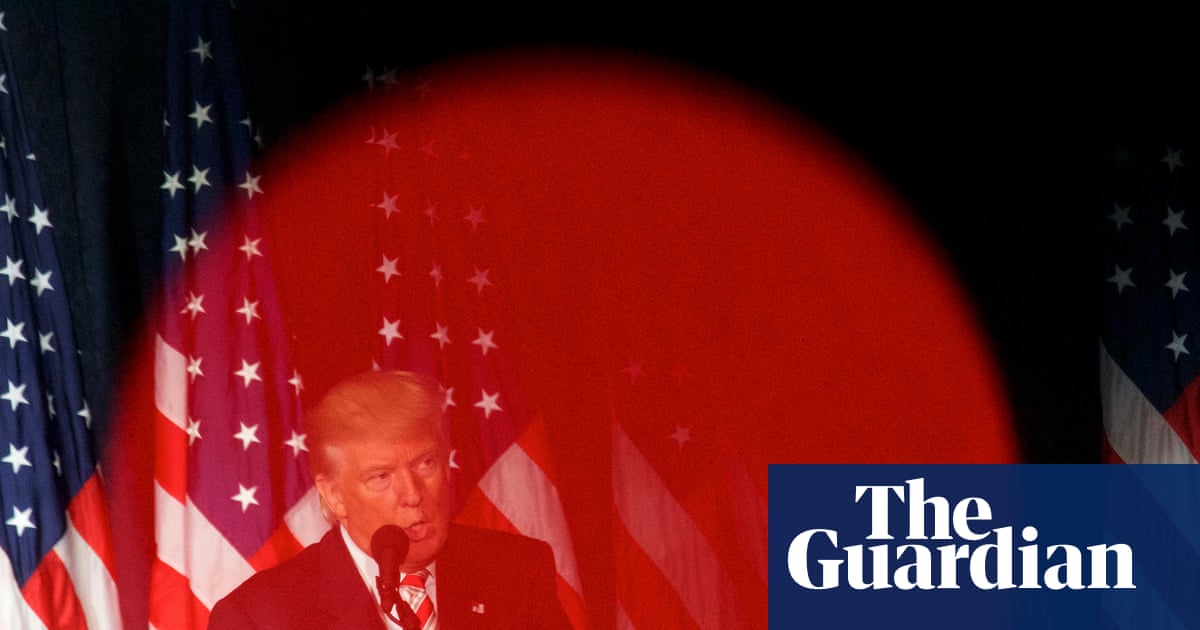
Image: theguardian.com · Author: https://www.theguardian.com/profile/eduardo-porter · source articleEditorial excerpt for news reporting
Donald Trump condemns communism while his administration expands the US government’s role in private companies. That creates a contradiction for Republicans who attack the Democrats’ leftward movement and Democratic socialism.
The Sweden-based V-Dem project recorded a sharp change in the United States’ position on state control of the economy: in 2025, the country fell from second to 16th place. From 2002 through 2024, the US had ranked among the four countries with the least state control.
Government stakes in strategic companies
By last November, the Trump administration had spent more than $10bn acquiring stakes in companies it considered important to national security. The investments included Intel and ventures mining critical minerals. Washington also obtained an option to take a stake in Westinghouse and secured a “golden share” in US Steel as part of the approval for Nippon Steel’s purchase.
State ownership does not by itself amount to the Soviet economic model. V-Dem still places the US below 163 countries in state control of the economy. Norway’s government holds a majority stake in its major oil company, while private companies account for 60% of China’s GDP.
Strategic policy or personal control
The article acknowledges a possible case for Washington to support industries critical to national security and technological competition with China. It argues, however, that Trump’s actions lack the discipline and coherence required for such a strategy.
Trump has opposed globalisation since his first term, promoted protectionism and state industrial policy, and threatened to stop trading with countries where the US runs a deficit. The Supreme Court has already rejected his attempt to take control of trade policy from Congress.
Authoritarian models in comparison
The article rejects the idea that Trump is pursuing the Soviet dictatorship of the proletariat. Instead, it compares his approach with rulers who used the state to enrich their families and secure dynastic power, including Vladimir Putin and Latin American dictators of the Cold War era.
Cullen Hendrix of the Peterson Institute for International Economics says Trump “clearly wants to be king”, but argues that the US political economy may constrain him. Autocratic control, he says, is harder to establish in a modern complex economy than in a less developed, oil-based state.
What we know
- The Trump administration spent more than $10bn on stakes in companies considered vital to national security.
- The US fell from second to 16th in V-Dem’s ranking of state control over the economy.
- Washington obtained an option in Westinghouse and a “golden share” in US Steel.
- Cullen Hendrix says the complexity of the US economy may constrain Trump’s authoritarian ambitions.
Trust: Single source
- The story relies on one publisher. A second independent confirmation has not been established from the cited sources.
- Cited links: 1. Publisher groups: 1. Sources: The Guardian Business.
- This describes the available source evidence, not a probability of truth or a claim of manual editorial review.
View sources1
COMMUNITY
Discussion
Sign in to join the discussion.
No comments yet. Start the discussion.